
MIG or TIG Welding for Your Railing, Gate or Staircase in Montenegro?
If a welder's quote mentions "MIG" or "TIG," it isn't just jargon — it affects how your railing, gate or staircase will look, how long it will last by the sea, and what you'll pay. In short: MIG welding is faster and more economical for structural steel frames — gates, pergola frames, larger load-bearing parts. TIG welding is slower, more precise, and the usual choice for visible stainless steel joints, thin material and anything where the weld itself will be seen up close, such as a staircase handrail or a balcony railing.
Neither process is "better" in general — each is right for a different part of the job, and a good fabricator often uses both on the same project. Here's what the difference actually means when you're ordering metalwork in Montenegro.
What MIG welding is
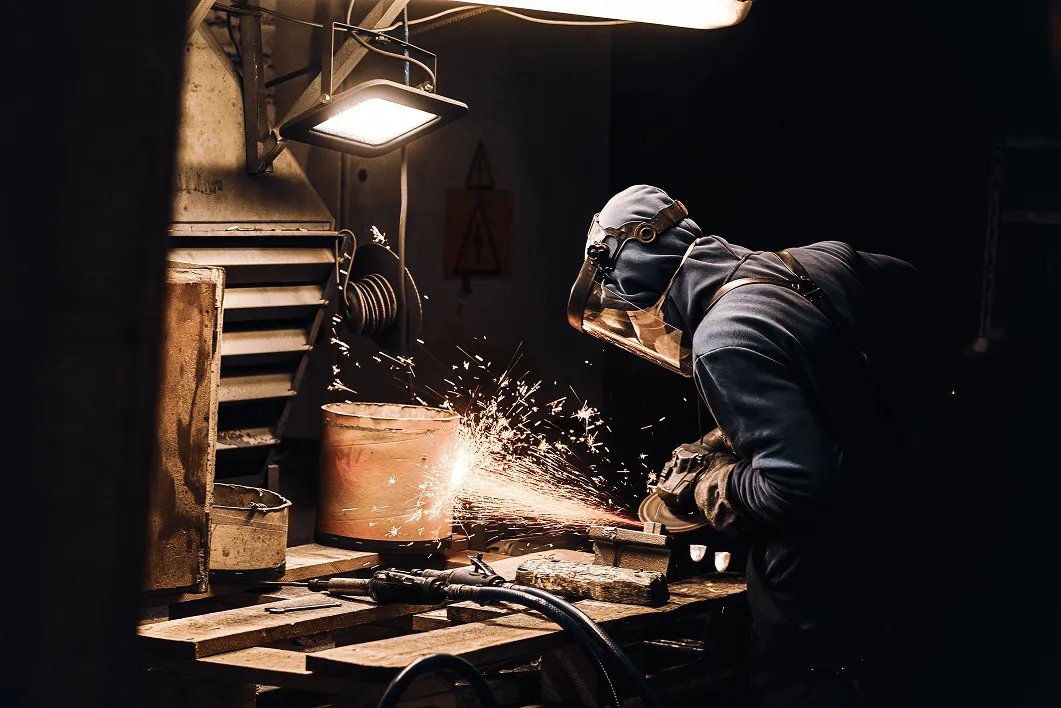
MIG (Metal Inert Gas, technically GMAW) feeds a thin wire electrode continuously through the welding gun. The wire melts and becomes the weld metal itself, while a shielding gas — usually a mix of argon and CO₂ for carbon steel — protects the molten pool from the air. The process is semi-automatic: the welder guides the gun, and the machine feeds the wire at a set speed.
That makes MIG relatively fast to learn and fast to run, with a high deposition rate — a lot of weld metal laid down per minute. It's the standard choice for carbon steel structures: gate frames, pergola and canopy frames, staircase stringers, fencing posts, and most of what holds a structure together but isn't necessarily meant to be admired up close.
What TIG welding is
TIG (Tungsten Inert Gas, technically GTAW) uses a non-consumable tungsten electrode to create the arc, with a separate filler rod fed in by hand when filler metal is needed. Pure argon shields the weld pool. There's no continuous wire feed and no spray of spatter — the welder controls heat and filler independently, with both hands, which is why it takes longer to learn and longer to run.
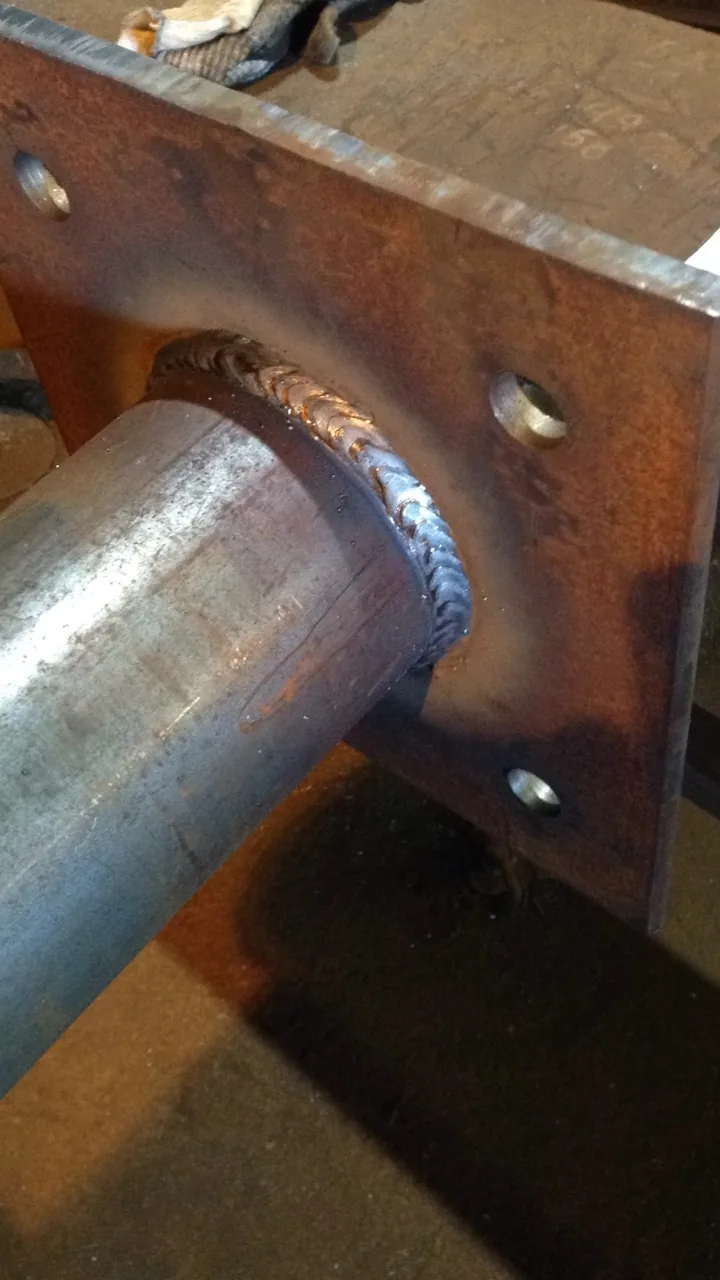
The payoff is control: a narrower heat-affected zone (less warping on thin sheet), a cleaner and smoother bead, and the ability to weld thin stainless steel, aluminum, or small precision parts without burning through. This is why TIG is the usual choice for visible stainless steel work — railings, balustrades, handrails, French balcony guards — where the finished weld is part of what you're looking at, not just a hidden joint under paint.
Why the difference actually matters on the coast
In Budva, Kotor, Tivat, Bar, Herceg Novi or Ulcinj, salty, humid air is the main reason stainless steel gets specified at all for outdoor railings and balustrades — it resists corrosion far better than untreated carbon steel. But stainless steel only performs as well as the weld holding it together. A poor-quality or contaminated weld on stainless can create a weak point where corrosion starts first, sometimes faster than on the surrounding metal. That's why the welding process for a stainless railing near the sea isn't a minor detail — it's part of how long the railing actually lasts.
Carbon steel framework that will be painted, galvanized or hidden inside a structure has a different priority: strength and welding speed matter more than a mirror-smooth bead, since the joint will be covered or isn't in the line of sight. That's the practical reason MIG remains the right tool for most structural steel in a canopy, pergola or gate frame, even on a coastal property.
MIG vs TIG at a glance
| MIG | TIG | |
|---|---|---|
| Typical use here | Gate and pergola frames, structural steel, staircase stringers | Stainless railings, handrails, visible thin-material joints |
| Speed | Faster, higher deposition rate | Slower, more deliberate |
| Weld appearance | Functional, usually ground/painted over | Clean, narrow, often left visible |
| Best on | Thicker carbon steel | Thin sheet, stainless steel, aluminum |
| Heat control | Less precise, more heat spread | Very precise, less distortion |
When you should specifically ask for TIG
- Stainless steel railings, balustrades and handrails that will be seen up close
- French balcony guards and pool fencing in stainless steel
- Any stainless joint directly exposed to sea spray, where weld quality affects corrosion resistance
- Thin-gauge sheet metal or small decorative details prone to warping
- Visible welds on a staircase where the finish is part of the design, not just structure
When MIG is the right, more cost-effective choice
- Gate and fence frames in carbon steel, later painted or hot-dip galvanized
- Pergola, canopy and carport frames — structural steel not usually examined at arm's length
- Reinforcement brackets, consoles and hidden structural connections
- Larger structures where welding speed keeps the project on a reasonable budget and timeline
- Repairs to existing carbon steel structures where matching the original weld type matters less than a solid, fast fix
A common misconception: "stainless steel always means TIG"
Not quite. Stainless steel can be MIG welded too, and for thicker stainless sections or less visible joints, that's sometimes the practical choice — it's faster and the difference in corrosion resistance, done correctly with the right wire and gas mix, is small. What actually pushes a job toward TIG is a combination of factors: thin material, a visible finished bead, and a joint that will be exposed to salt air where any weld defect becomes a future weak point. A fabricator who automatically TIG-welds everything, including hidden structural steel, is adding time and cost without a real benefit — and one who MIG-welds a visible stainless railing to save time may be trading a slightly rougher, less corrosion-resistant joint for a lower price. Ask which process is planned for which part of your project, and why.
What to specify when you request a quote
You don't need to know welding to get the right result — you need to ask the right questions. When requesting a quote for a railing, gate, staircase or any outdoor structure:
- Tell the fabricator where the piece will be installed (distance from the sea, sun/wind exposure) — this affects the material recommendation, not just the welding process
- Ask which parts, if any, will be TIG welded and which will be MIG welded, and why
- If ordering in stainless steel, ask whether it's AISI 304 or 316 — 316 handles chloride exposure better and is usually worth it directly on the waterfront
- Send photos, rough measurements or a sketch of what you need — a clear idea of the piece lets a fabricator recommend the right process and material combination rather than a one-size-fits-all answer
Frequently asked questions
Is TIG welding always stronger than MIG?
Not necessarily — a correctly done MIG weld on the right material is fully strong for its purpose. TIG's advantage is precision and finish quality, especially on thin or stainless material, not raw strength on thick structural steel.
Why does TIG welding cost more?
It's slower to perform and requires more skill and concentration from the welder, since heat and filler are controlled by hand rather than fed automatically. The extra time and precision are what you're paying for, and on a visible stainless railing it's usually worth it.
Can MIG and TIG welding be combined on the same structure?
Yes, and it's common. A gate might have a MIG-welded structural frame with a TIG-welded stainless infill panel or decorative section, for example — each process used where it makes sense.
Does the welding process affect how a railing should be maintained?
Less than the material and installation quality do. Either way, rinsing salt residue off stainless steel periodically and checking joints for early surface rust helps any weld — MIG or TIG — last as long as it should.
How do I know which process my fabricator actually used?
Ask before the work starts, and ask to see finished samples or previous projects. A fabricator confident in their process should be able to explain, in plain terms, why they chose MIG or TIG for a specific part of your job.
Get a recommendation for your project
If you're planning a railing, gate, staircase or any outdoor metal structure and aren't sure which welding approach fits your situation, send us a photo of the location, rough measurements or a sketch, and a short description of what you need. We'll recommend the right material and process — MIG, TIG, or a combination — and give you a preliminary assessment before any work begins.